
Not Just Deals: Emerging AI Trends in Memorial Day Sales
Memorial Day sales are often seen as a time to grab discounts on consumer electronics, but a closer look at this year's offerings from The Verge's roundup reveals a deeper story: the quiet infiltration of AI and sensor technology into everyday devices. While most coverage focuses on price cuts, the technical leaps behind these products deserve attention. Among the dozens of deals — from noise-canceling earbuds to robot vacuums — two stand out for their integration of advanced sensing and machine learning: the AirPods Pro 3 and the Ecovacs Deebot X12 OmniCyclone. These aren't just deals; they are signposts for where consumer AI is heading.
AirPods Pro 3: Health Monitoring Goes Mainstream
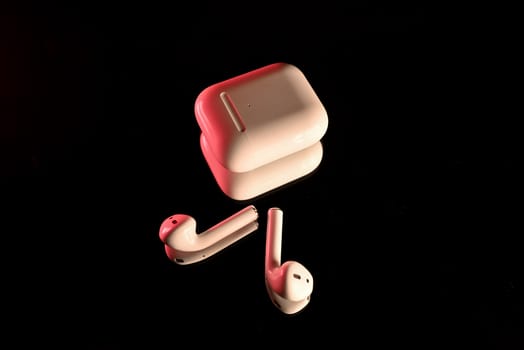
Among the most technically significant items is the AirPods Pro 3, currently available for $199.99 ($50 off) at Amazon, Walmart, and Best Buy. According to The Verge's review, the third-generation AirPods Pro feature a redesigned fit, superior noise cancellation, better bass, and, notably, "fairly accurate heart rate sensors." This is a pivotal addition: Apple's wireless earbuds are no longer just audio devices — they are becoming health wearables that sit in your ears. The heart rate sensor uses optical and electrical sensors to measure pulse, opening the door for passive continuous health tracking without the need for a watch or chest strap. For the tech community, this signals a convergence of two categories: personal audio and digital health. Developers building health apps now have a new platform to target. Apple has long promoted the Apple Watch's health capabilities, but the AirPods Pro 3 lowers the barrier — users who don't want a watch can still get heart rate data. The accuracy claim, while qualified as "fairly accurate" by The Verge's reviewer, suggests the technology is mature enough for everyday use, not just medical diagnosis. This shift also raises privacy implications: ear-based biometrics are harder to spoof than wrist-based ones, and Apple's on-device processing likely keeps data secure. However, the absence of a dedicated health API announcement (as of yet) means third-party access may be limited — a point developers should watch.
Robot Vacuums and the Evolution of AI Navigation
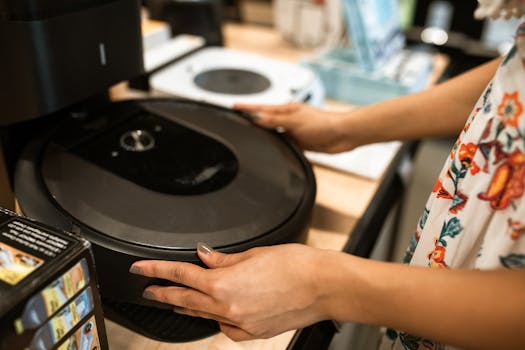
Another standout in the sales list is the Ecovacs Deebot X12 OmniCyclone, priced at $1,249 ($250 off) — matching its best price to date. The Verge highlights its 22,000Pa suction and a 10.6-inch roller mop, but the real story is the AI-driven engineering behind it. Ecovacs' "Boosted Large-Airflow Suction Technology" doesn't just amplify power; it optimizes the airflow path from intake to exhaust. This is an example of AI at the system level — machine learning models analyze floor type, debris volume, and airflow dynamics to adjust suction in real time, rather than running at full blast constantly. The result is more efficient cleaning and longer battery life. Additionally, the Deebot X12 OmniCyclone continues the company's trend of self-cleaning mops — a feature that relies on computer vision to detect dirty zones and mop pads that scrub themselves after each use. For robotics enthusiasts, this represents a move toward truly autonomous home maintenance. The sensor suite includes LiDAR and cameras for simultaneous localization and mapping (SLAM), allowing the vacuum to navigate complex rooms without bumping into furniture. The $1,249 price point, while premium, reflects the cost of these sensors and edge AI processors. As more robot vacs adopt similar technologies, we can expect sub-$500 models to eventually include self-cleaning and airflow optimization, making AI-driven cleaning the new baseline.
Smart Thermostats: AI for Energy Savings
The Verge's roundup also features multiple Ecobee thermostat deals: the Smart Thermostat Premium at $229.99 ($30 off), the Smart Thermostat Enhanced at $169.99 ($30 off), and the Smart Thermostat Essential at $119.99 ($20 off). Ecobee's differentiators are AI-based. The Premium model adjusts temperature based on occupancy (using built-in radar), sends alerts for temperature extremes, and tracks indoor air quality metrics like VOCs and CO₂. It also doubles as a smart speaker with Alexa integration. The Enhanced model lacks voice control and air quality monitoring but still uses occupancy detection to save energy. Even the basic Essential model integrates with Alexa, Google Assistant, and Apple Home. For developers, Ecobee's open API for third-party integration is a key feature — it allows custom automations and energy dashboards. The $30 discount on each model brings these AI-powered thermostats closer to mainstream adoption. The trend here is that machine learning for HVAC optimization is no longer a luxury; it's becoming standard across tiers. According to Ecobee, users can save up to 26% on heating and cooling costs annually with occupancy-based adjustments. That's a concrete, data-driven benefit that tech professionals can appreciate. The competition between Ecobee and Nest continues to push innovation, with AI at the core of energy management.
What This Means for the Tech Community
The common thread across these Memorial Day deals is that AI is no longer a premium feature — it's becoming standard. For developers and tech professionals, this signals a strategic shift in hardware design: sensors and on-device machine learning are now expected in consumer products ranging from $99 earbuds to $1,249 robot vacuums. The availability of these devices at discounted prices suggests a maturation of the technology, making it accessible to a broader audience. The Verge's roundup, while presented as a simple deals article, inadvertently provides a snapshot of where consumer AI is headed. Developers should take note of the AirPods Pro 3's health sensor: it opens a new vector for health apps and wearable integration. The Ecovacs Deebot X12's AI-driven airflow optimization demonstrates that even mundane tasks like vacuuming can benefit from intelligent control systems. And Ecobee's thermostat lineup shows that AI can deliver measurable energy savings while respecting user privacy. Looking ahead, we can expect these features to trickle down to lower price points. The AirPods Pro 3's heart rate sensor may appear in cheaper earbuds within two years. Self-cleaning mops and AI-optimized suction will become common in mid-range robot vacs. Smart thermostats with occupancy detection will likely become the standard for new home installations. For the AI and tech community, the lesson is clear: the battleground for consumer AI is no longer just software — it's the integration of sensors, edge compute, and machine learning into everyday hardware. The Memorial Day sales are a reminder that innovation is often hiding in plain sight, buried under price tags and discounts.

コメント